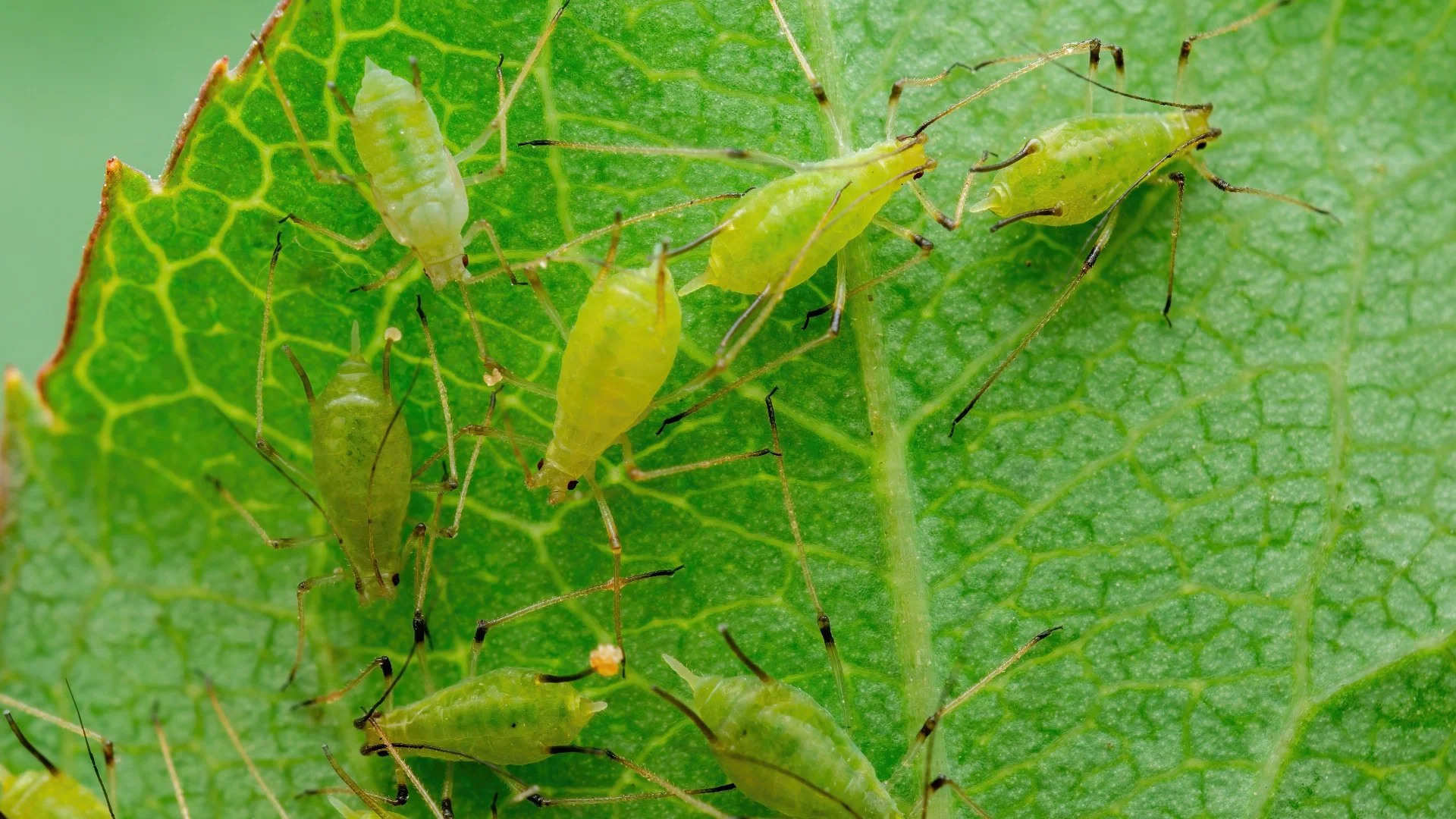
In Florida, trees and shrubs often fall victim to scale insects, mealybugs, and aphids. Scale insects, both armored and soft, appear as tiny bumps and are active from spring to fall. They can cause wilting leaves and branch dieback. Mealybugs are identifiable by their white, cottony appearance and cause yellowing leaves, as well as sooty mold growth. Aphids, which are small and pear-shaped, cluster on new growth, causing curled leaves and stunted growth. Their activity peaks from spring through summer, and they, too, contribute to sooty mold by secreting honeydew.
Scale insects suck sap from your trees and shrubs.
Scale insects can be pretty sneaky. At first glance, they might look like tiny bumps on your plants and are easy to overlook. They’re tiny—just a few millimeters long—but don’t let their size fool you. These little invaders come in two main types: armored and soft scales. Armored scales are tiny and oval-shaped, with a hard, protective covering that makes them look like small, motionless bumps on plant surfaces. Their color can range from brown to black, blending in with bark and leaves. Soft scales, in contrast, have a smoother, waxy appearance, often appearing yellowish or brownish.
Feeding on sap, scale insects weaken trees and shrubs by depriving them of essential nutrients. Their life cycle consists of three stages: egg, nymph (or crawler), and adult. The crawlers are the most mobile stage and the most vulnerable to treatments. Left unchecked, they can cause significant damage to trees and shrubs in Florida. You'll notice wilting leaves, stunted growth, and branch dieback, primarily when the infestation is severe. The honeydew secreted by these pests can also lead to sooty mold, further harming your plants.
Mealybugs Can Cause Stunted Growth & Yellowing Leaves on Trees & Shrubs
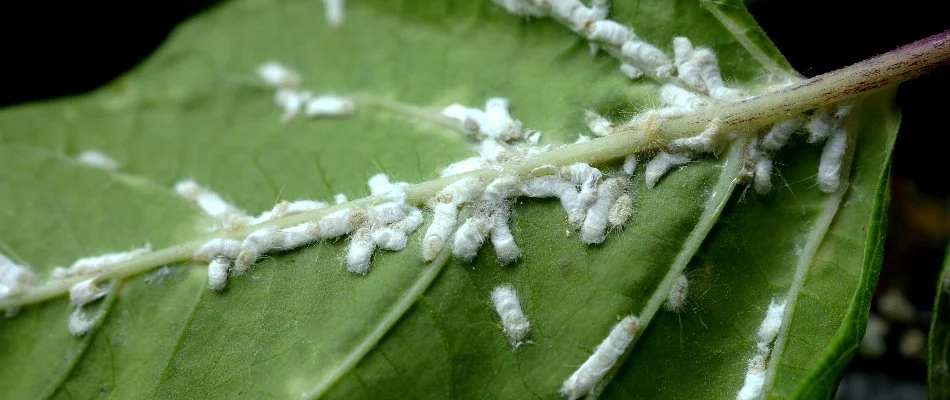
Mealybugs are another threatening pest to trees and shrubs in Florida. Recognizable by their distinctive white, cottony appearance, these soft-bodied insects often congregate on the undersides of leaves and stems. Mealybugs have oval-shaped bodies covered with a waxy secretion, which helps them survive various environmental conditions. Their presence is often marked by white, powdery clusters in protected areas of the plant, where they find solace from predators.
Like scale insects, mealybugs feed on plant sap, leading to weakened plants, yellowing leaves, and even branch dieback. Their life cycle is relatively short but prolific, allowing populations to grow rapidly. A female can lay hundreds of eggs, which hatch into tiny crawlers that spread throughout the plant. Mealybugs are most active during the warmer months, from late spring to early fall. Their feeding results in honeydew production, encouraging sooty mold growth and attracting ants, which can further disrupt the plant’s health.
Aphids are small insects that pierce plant tissues to extract nutrient-rich sap.
Aphids, often referred to as plant lice, are small, pear-shaped insects that vary in color from green and yellow to black and brown. They are commonly found on the new growth of trees and shrubs, where they gather in large numbers. Despite their small size, aphids are easily visible due to their clustering behavior. With their soft bodies and long, slender legs, aphids can move quickly across plant surfaces, especially the tender new growth they prefer.
Aphids feed by piercing plant tissues with needle-like mouthparts, extracting the nutrient-rich sap. Their feeding weakens plants, curling leaves, stunting growth, and, in severe cases, killing young shoots. Their life cycle includes both wingless and winged forms, which allows them to rapidly colonize new plants. In Florida, their activity peaks from spring through late summer, with multiple generations possible in just one season. As with other sap-sucking pests, aphids produce honeydew, which attracts ants and fosters sooty mold growth, compounding the damage to plants.
Give us a call today to schedule our tree and shrub insect control service!
Trees and shrubs in Florida are vulnerable to various types of insects. To ensure your plants have reliable defense against these pesky insects, take advantage of our tree and shrub disease and insect control service. This service is offered as needed, which means you can schedule this whenever your plants are under attack from invasive pests. While this is available independently, our treatments against diseases and insects are also part of our comprehensive tree and shrub care program, which also includes fertilization treatments.
Our team at FertiGator Lawn Care proudly offers this service to residential property owners in The Villages, Lady Lake, Wildwood, and nearby areas of Florida. Call us today at (352) 314-2867 to enroll!

Comments (0)
Thanks for your comment!
Thanks for your feedback! Your comments have been successfully submitted! Please note, all comments require admin approval prior to display.
Error submitting comment!
There is a problem with your comment, please see below and try again.