
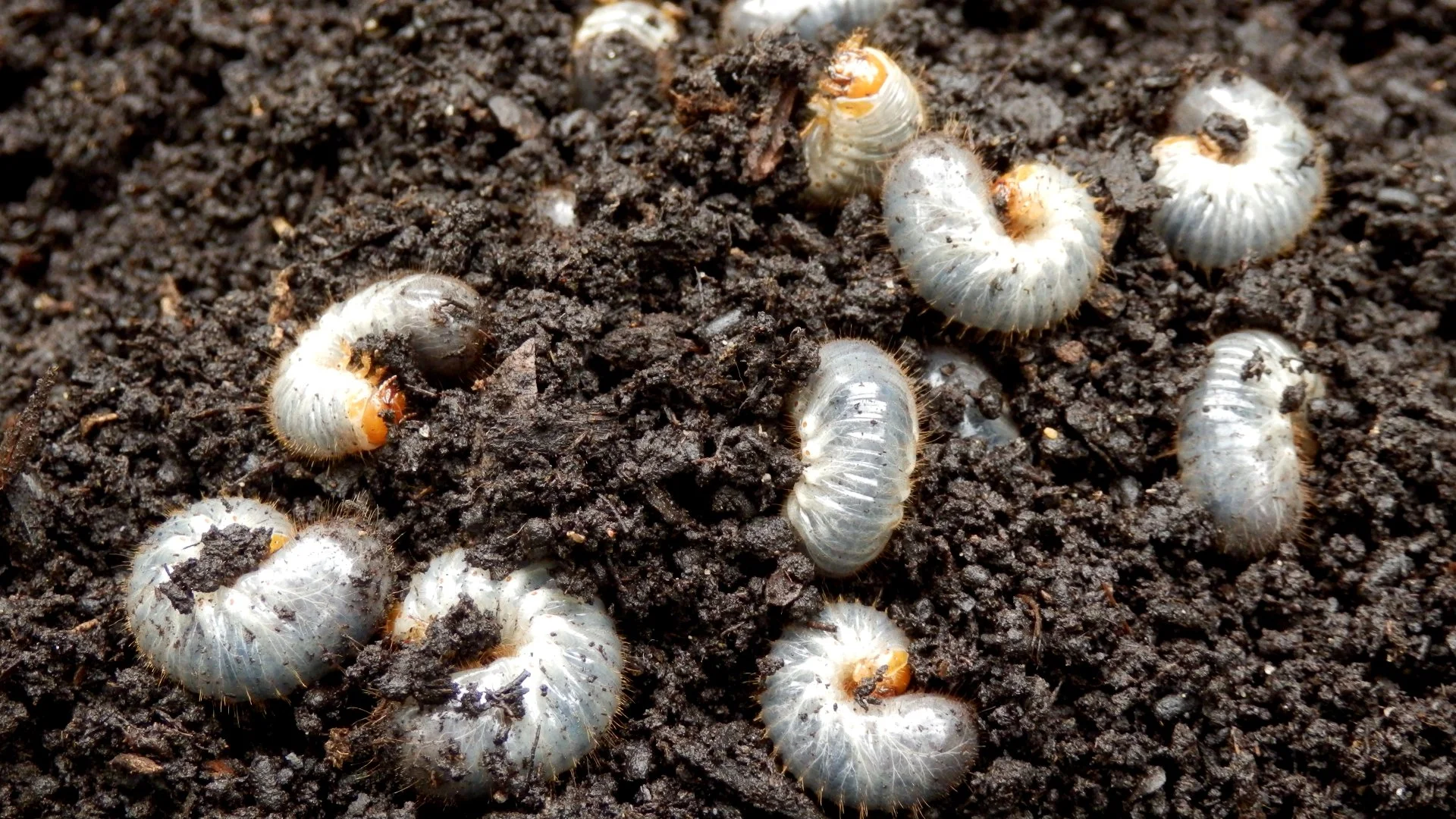
Grubs are a common lawn pest that can cause significant damage to your grass in Florida. These pests feed on the roots of your grass, causing the grass to die. Unfortunately, most people don't know their lawn is infested with grubs until they start to see their grass die. Grub damage can be subtle at first, but it can quickly become severe if left untreated. To prevent this from happening, you should apply preventative grub control treatments to your lawn roughly every 2 months throughout the year. By doing so, you can prevent grubs from infesting your lawn and causing damage to your grass. This will save you time, attention, and money in the long run, as you won't have to deal with the hassle of treating a grub infestation and nursing your lawn back to health.
Most people don't know their lawn is infested with grubs until they start to see their grass die.
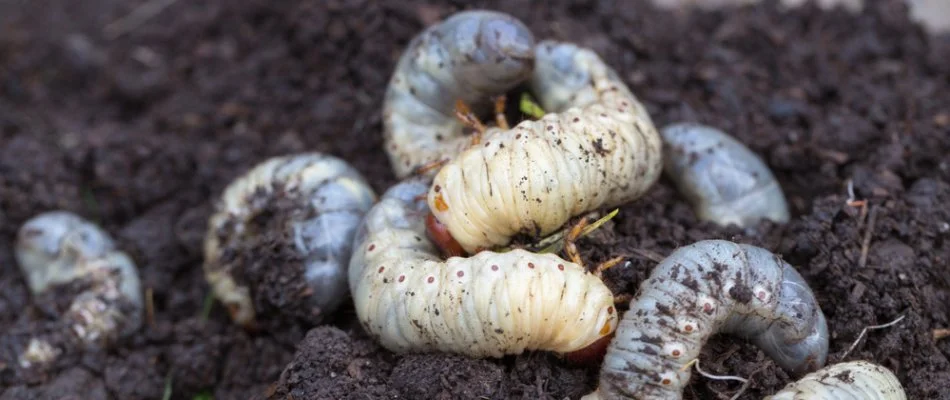
Grubs are the larvae of beetles, and they feed on the roots of your grass. As they feed, they detach the roots from the soil, causing the grass to die. Unfortunately, most people don't know their lawn is infested with grubs until they start to see their grass die. This is because grub damage can be subtle at first, and it can take some time for the damage to become visible.
Early signs of grub damage include thinning grass, yellowing, and wilting. As the grubs continue to feed on the roots of your grass, the damage becomes more severe. You may start to notice brown patches of grass that feel spongy when you walk on them. If you pull up a section of the affected grass, you may notice that the roots are missing or have been chewed off. This is a clear sign of grub damage.
Grub damage requires lots of time, attention, and money to nurse your lawn back to health.
If your lawn is infested with grubs, it will require lots of time, attention, and money to nurse your lawn back to health. You'll need to apply a curative grub control treatment to get rid of the grubs. Then, you'll need to invest in lawn care services to help your grass recover. This can include fertilization and aeration to help your grass grow back strong and healthy. All of this can be costly and time-consuming, which is why it's important to take preventative measures to avoid a grub infestation in the first place.
Apply preventative grub control treatments roughly every 2 months throughout the year.
The best way to prevent a grub infestation is to apply preventative grub control treatments to your lawn roughly every 2 months throughout the year. These treatments work by eliminating grubs before they have the chance to start feeding on the roots of your grass. By applying these treatments regularly, you can prevent grubs from infesting your lawn and causing damage to your grass.
Call us today to schedule our grub control service.
If you're looking for a way to prevent grubs from infesting your lawn, we are the company to call. As part of our grub control service, we'll apply preventative treatments to your lawn every 2 months to keep these pests from damaging your lawn. We also offer a curative treatment to eliminate grubs if they've already infested your lawn. This service is offered to property owners in The Villages, FL, and surrounding areas like Lady Lake and Wildwood. Give us a call today at (352) 314-2867 to schedule our grub control service and protect your lawn from grubs!

Comments (0)
Thanks for your comment!
Thanks for your feedback! Your comments have been successfully submitted! Please note, all comments require admin approval prior to display.
Error submitting comment!
There is a problem with your comment, please see below and try again.